
Best Time to Visit Osaka: Weather, Festivals & Prices
Plan your Osaka trip with data on cherry blossoms, autumn foliage, and flight costs. Learn when to avoid crowds and find the cheapest months for travel.
By the Journey Planner editorial team · Published 26 August 2026 · Updated 27 September 2026
Quick answer
The best months to visit Osaka are April for cherry blossoms and November for autumn foliage and stable 14°C to 19°C temperatures. For the lowest costs, January and February offer flights and accommodation at approximately 30% less than spring peaks, though temperatures drop to 3°C. Avoid Golden Week (late April to early May) and Obon (mid-August) when domestic tourism causes hotel rates in Namba and Umeda to double and wait times at attractions to exceed two hours.
Osaka weather and crowds by month
| Month | Avg Temp (°C) | Rain (mm) | Crowd Level | Flight Price |
|---|---|---|---|---|
| Jan | 6 | 45 | Low | Low |
| Feb | 6 | 60 | Low | Low |
| Mar | 10 | 105 | Moderate | Moderate |
| Apr | 15 | 130 | Very High | Peak |
| May | 20 | 145 | High | High |
| Jun | 24 | 185 | Moderate | Low |
| Jul | 28 | 155 | High | High |
| Aug | 29 | 90 | High | High |
| Sep | 25 | 170 | Moderate | Moderate |
| Oct | 19 | 110 | Moderate | Moderate |
| Nov | 14 | 70 | High | Moderate |
| Dec | 9 | 45 | Moderate | High |
Seasons in Osaka
Spring (March to May)
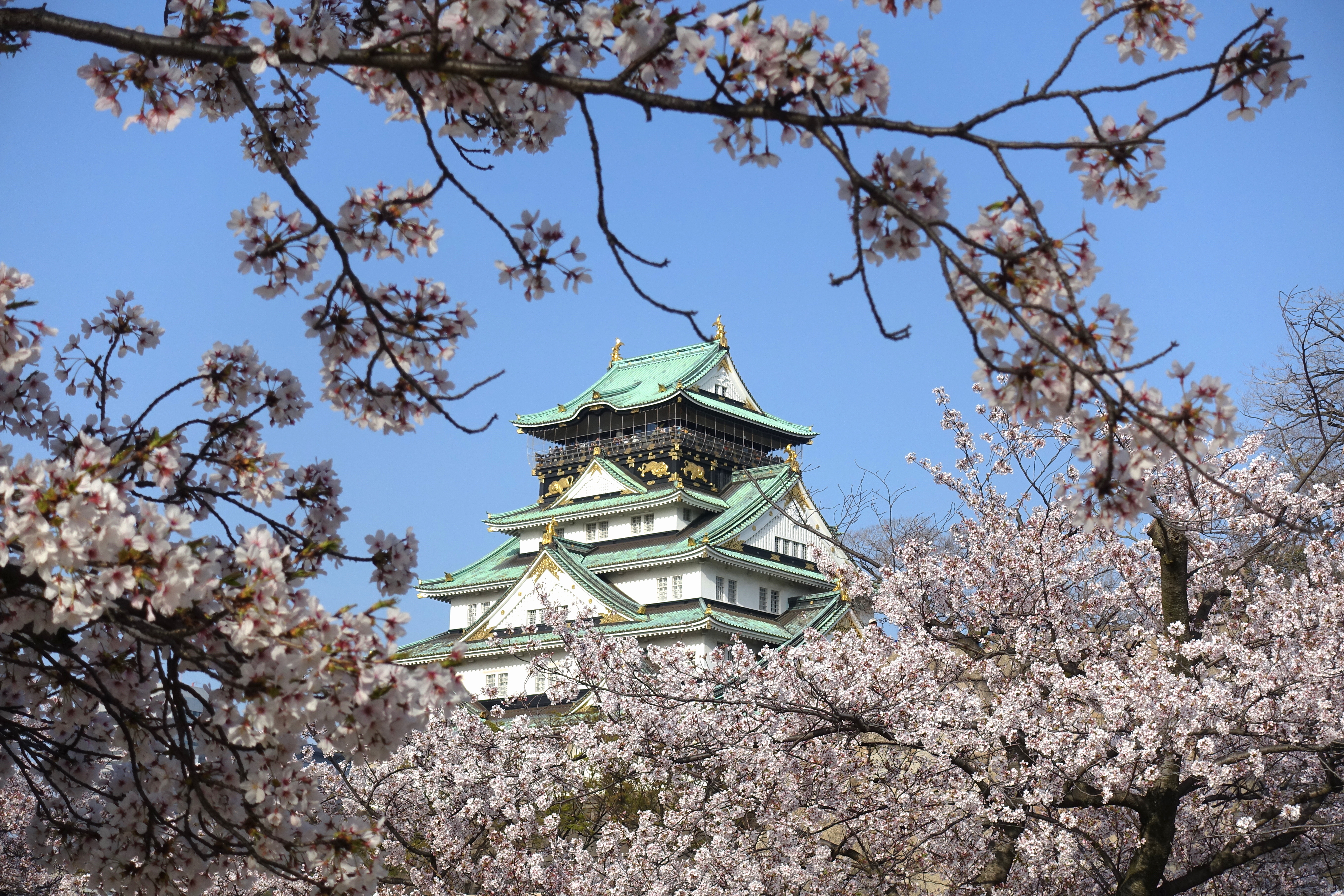
Spring is defined by the sakura bloom, typically peaking between 25 March and 5 April. During this window, Osaka Castle Park and the Expo '70 Commemorative Park experience heavy foot traffic. Daytime temperatures average 15°C, requiring a light jacket. This is the most expensive time to book accommodation near major transport hubs like Shin-Osaka Station. If you plan to visit the Osaka Mint Bureau's famous cherry blossom tunnel, note that it only opens for one week in mid-April and requires an advance online reservation which fills up weeks ahead.
Summer (June to August)
June marks the start of the tsuyu (rainy season). Expect high humidity and sudden downpours that can last for days. By July and August, temperatures frequently exceed 30°C with humidity making it feel like 38°C. This coincides with major events like the Tenjin Matsuri. If visiting Universal Studios Japan (USJ) in the Konohana Ward, purchase an Express Pass (approx. ¥10,000–¥20,000 / $65–$130) to avoid standing in unshaded queues for 90+ minutes. Walking between Dotonbori and Shinsaibashi-suji is best done in the early morning or after 6 PM to avoid the peak heat.
Autumn (September to November)
September carries a risk of typhoons, which can disrupt Shinkansen services to Tokyo or the Nankai Railway to Kansai International Airport. However, October and November provide the most stable weather for walking tours through Shinsekai or the Minoo Park trails. The maple leaves (momiji) turn bright red in mid-to-late November, particularly striking around the Katsuo-ji Temple. This season offers a balance of manageable crowds and comfortable 18°C weather, though popular foliage spots will be busy on weekends.
Winter (December to February)
Osaka rarely sees heavy snow, but the air is dry and cold. The city is illuminated by the Midosuji Illumination, stretching 4km from Umeda to Namba. This is the best time for indoor activities, such as visiting the Osaka Aquarium Kaiyukan in Minato-ku (approx. ¥2,700 / $18 entry). Domestic travel spikes around New Year (29 December to 3 January), during which many independent restaurants and shops close for three to five days. January and February are the driest months, offering clear skies for views from the Umeda Sky Building or Abeno Harukas.
Which traveller suits which season?
- Budget Travellers: January and February are the cheapest months. You can find business hotels in areas like Nishinari-ku or near Daikokucho Station for under ¥6,000 ($40) per night. June is also affordable due to the rain, with lower airfares available for those who don't mind carrying an umbrella.
- Photography Enthusiasts: Late March for cherry blossoms at the Mint Bureau or late November for the golden ginkgo trees lining Midosuji Boulevard. The "diamond" sunset view from the Osaka Cosmos Tower is best captured in the crisp air of February.
- Families: Late May or October offer mild weather suitable for the 15-minute walk from the JR Sakurajima Line to USJ. The Tennoji Zoo and the surrounding park area are also easier to navigate when temperatures are between 18°C and 22°C.
- Foodies: Winter is peak season for crab (kani) and fugu (pufferfish) in Dotonbori. Summer is the traditional time for eating unagi (eel) to combat fatigue from the heat. The Kuromon Ichiba Market is less congested on weekday mornings in February and September.
Major festivals and events
- Toka Ebisu (9–11 January): Held at Imamiya Ebisu Shrine. Over one million people visit over three days to pray for business success. Entry is free, but the area around Ebisu-cho Station becomes extremely crowded.
- Tenjin Matsuri (24–25 July): One of Japan's top three festivals. Features a land procession and a boat procession on the Okawa River with fireworks. Expect significant transport delays near Temmabashi Station.
- Sumiyoshi Matsuri (30 July–1 August): The final large summer festival at Sumiyoshi Taisha, known for the symbolic purification rituals and traditional performances.
- Osaka Hikari-Renaissance (December): Large-scale light projections on the Osaka City Central Public Hall in Nakanoshima. Best viewed by walking from Yodoyabashi Station.
The cheapest months to fly
Data indicates that mid-January to February and the month of June are the most affordable periods to fly into Kansai International Airport (KIX). Return flights from European hubs can drop to £600–£750, compared to £1,200+ in April. To reach central Osaka from KIX, the Nankai Rap:t express train (approx. ¥1,450 / $9.50) reaches Namba in 35 minutes. A private taxi for the same route can exceed ¥15,000 ($100) and takes roughly 50 minutes depending on Hanshin Expressway traffic. Check the official site for the most current pricing before you go.
Common mistakes
- Visiting during Golden Week: The period from late April to early May sees millions of domestic travellers. Expect 120-minute waits for popular ramen shops in Dotombori and fully booked Shinkansen trains to Kyoto or Tokyo.
- Underestimating Summer Humidity: The heat index in August often feels like 40°C. Planning outdoor walks in the afternoon between 1 PM and 4 PM often leads to heat exhaustion. Use the extensive underground malls in Umeda and Namba to stay cool.
- Assuming Sakura Dates: Cherry blossoms are weather-dependent and can bloom ten days early or late. Check the Japan Meteorological Corporation forecasts starting in January to time your visit accurately.
- Ignoring Monday Closures: Several municipal museums, including the Osaka Museum of Housing and Living, close on Mondays. If Monday is a national holiday, they usually close on Tuesday instead.
- Overlooking Typhoon Season: September travel requires flexible bookings. Heavy rain and high winds can suspend the Nankai and JR lines connecting KIX to the city centre, effectively cutting off airport access for several hours.
Plan your trip
Journey Planner turns this guide into a personalised day-by-day itinerary for your dates and group. You get monthly weather for your travel month, estimated flight, hotel and attraction costs in your currency, outfit ideas and a packing list for the season — free, no login required.
Prices, opening hours and transport times in this guide are estimates used for planning and can change with season and operator. Check official sites before you book.
More Osaka guides
- Destination overviewOsaka Travel Guide: Plan Your Visit to Japan’s Food Capital
- First-time visitor guideOsaka First-Timer Guide: Arrival, Transport, and Etiquette
- ItineraryOsaka Itinerary 3 Days: Strategic Plan for Food and Culture
- ItineraryOsaka Itinerary 5 Days: The Complete Day-by-Day Plan
- Trip planner comparison5 Best Trip Planner Websites, Compared
- Trip planner comparison5 Best AI Trip Planner Websites and What They Actually Do Well
More planning help in the Osaka travel guide, or browse all travel guides and itineraries.
Plan this trip in seconds
Turn this guide into a day-by-day itinerary with weather, costs and a packing list.
Plan My Osaka TripAlready have an itinerary?
Check whether your plan is realistic: overloaded days, excessive travel time, inefficient routing, too much walking, opening-hour conflicts and poor geographic grouping.
Analyze My Itinerary